Blog

  • What Time Is Bedtime?

    When I was a younger man, I’d typically stay up until midnight or later on a daily basis. I’d go to bed, get a solid 7 or 8 hours, and be bright-eyed and bushy-tailed for work the next morning.

    I then moved in and shared a bedroom with someone who preferred a slightly earlier bedtime. If they went to bed at their preferred bedtime, and I stayed up a couple of hours later, then they found it very disruptive when I went to bed. If they’d already fallen asleep, and I woke them up when I eventually turned in, then they’d find it very hard to get back to sleep afterwards. I’d often see them sleepily shambling around the house at 1am asking me if I was coming to bed yet, because they were trying to avoid dropping off until they knew that there’d be no further disturbance. So I did the only decent thing, which was to align my bedtime with theirs, and get used to having a couple of hours more sleep per night. This did mean that I was losing out on my solo recreational time in the evenings, but you know what they say: happy wife, happy life.

    As I’ve aged, my body apparently has changed to reject lie-ins. This is a disastrophe. Once I’ve got my requisite 6 or 7 hours, my body says “nope, no more” and it becomes physically uncomfortable to stay horizontal. I reckon that this is a combination of an irregular heart rhythm and the natural rise in cortisol levels that the body experiences before waking, but I honestly have no medical training so I am pulling this out of my arse. The effect of this is that I’d find myself awake a few hours before the rest of the household, tiptoeing around so as to avoid waking anyone. To be fair, my daughter sleeps like a log, so I couldn’t wake her if I tried, but Karen’s insomnia meant that it would often take her many hours to fall asleep, and so if I’m clomping around the house making noise at 6am then I’m actually disturbing the best part of her sleep.

    Now that I’m living alone again, I have the freedom to choose my own routine. I can go to bed when I want, and if I’m up early, I can get on with my day. Within reason, of course – I’m not going to start vacuuming or putting on loud music that might disturb the neighbours. However, where it used to come naturally to go to bed at or after midnight, nowadays I find myself getting tired a bit earlier. Last night, for example, I was already struggling to keep my eyes open at 8:30, and so I got an early night. Granted, I’ve got a lot going on in my life right now, so the occasional need for an early night isn’t absurd. But it does mean that, having turned off my light before 10pm, I’m now fully awake at 5am writing a blog post and wondering what I’m going to do to with the next 4 hours before work.
  • Houseproud and Tidy

    I have always had a preference for tidy, uncluttered spaces. I think that this is probably down to the influence of my parents, who were both the same. However, my bedroom when I was a child was very, very small, and keeping it tidy was a challenge. I’ve written before about the junk tide mark, which is the line that delineated the boundary between visible carpet, and all the crap that I kept on the floor but pushed to the side, through necessity. I found it very difficult to part with toys that I no longer had a use for, which meant that my cupboards were always stuffed to overflowing.

    Once I moved out of that house, things started to improve, and in the various places I lived over the next few years I was able to create and sustain an environment which was more pleasing to me. But things have deteriorated inchwise over the last ten years. Living with untidy people had a cumulative detrimental effect on me. It started off with little compromises, and progressed on to a sense of obligation to tidy up after other people in order to keep the house in a bearable1 state. This then bred resentment, and so I stopped caring about other peoples’ mess, and instead tried to just tune it out. However, that led to me “detaching” from the shared spaces in the house. I didn’t want to feel like I was contributing to the mess, so I withdrew the vast majority of my possessions into a single room, which was the space that I had full control over. This did result in that room being tricky to keep tidy, but it felt preferable to the alternative. It had the more significant impact that I stopped feeling like this house was my home, and any residual sense of houseproudness went scurrying into hiding.

    Now that I am living in this house on my own, the transformation has been near-instantaneous. I had a day of tidyblitzing, and started redistributing my possessions back around the house. Tidying and cleaning bring me joy once again, and the tidiness of the house also makes it easier to clean. I have once again started making use of all the rooms in the house, instead of predominantly retreating to the only one that feels like mine. It’s good.

    1. I recognise that what is “bearable” to me may not align with the sensibilities of others, and I do not judge people who have differing needs to me[↩]
  • Solo Cinema

    This evening I went to the cinema on my own to see Wicker, starring Olivia Colman and Alexander Skarsgård. A very fun and beautiful film, which starts off hilarious and lewd before gradually morphing into profound, thought-provoking, and ultimately incredibly satisfying.

    To my knowledge, this is the first time I’ve ever been to the cinema on my own. In the past I’ve always treated the cinema as a social experience, and so unless I’m going with someone else then I might as well watch a film at home. And to be honest, I don’t really go to the cinema very often at all. But this felt like an opportunity to experiment and try something new. I’m going to be doing things on my own a lot more now, and so I’m not going to shy away.

    That said, different activities lend themselves to solo enjoyment to varying extents. Sitting in a darkened room and watching a film on your own is fairly safe. I think that going out for a meal on your own in a romantic restaurant on Valentine’s Day might be a slightly more daunting prospect. I’ll work up to that gradually, but now that I’ve written it down, there’s a bloody-mindedness in me that wants to grab that challenge with both hands and show it who’s the boss.

  • People Pleasing

    It was alarming to realise that I don’t really know what I want.

    It started off gradually, in childhood. At some point I did something, or made a certain decision, that gained approval from someone I respected. For a little while, I didn’t feel like such a loser, because this other person clearly thought I’m okay. The self-esteem issues were temporarily muted. And then over the course of years – decades – I found myself chasing more and more the things that make other people happy, in order to be able to bask in the glow of their comfort, rather than doing the things that make me happy directly, and risk having to upset someone. Other peoples’ distress is crippling when you feel that it is your responsibility to fix it, and it feels selfish to look after your own needs when you know that you have the power to soothe the pain of others instead. People told me what a good listener I am, how delightful I am to be around, how kind and generous I am. That validation becomes like an addiction. It becomes your sole purpose in life – to be what other people want you to be. I noticed that I have a tendency to agree with whoever I’m talking to at the time, and my opinions ebb and flow depending upon who I spoke to last.

    Given time, I gained an instinctive reflex action to bury my own feelings when the emotional bidding war begins. As soon as I sense that someone else is getting a bit out of shape, my own feelings scamper away underneath the furniture in order that I can focus on helping the other person recover. It’s not done intentionally, it just happens by itself, and three days later I find myself reflecting on what happened, and wondering why I feel like a supporting character in my own relationships. I became an expert at avoiding conflict by keeping to myself, and being the person that other people want me to be.

    Now the people-pleasing bubble has finally burst, and I find myself questioning what the concept of “pleasure” even is. The things that I believe that I enjoy – do I really enjoy them, or have I just conditioned myself to enjoy them because that’s what the people around me enjoy? And this is where the work begins. Because I need to rediscover passion, and joy. It’s in there somewhere. It’s in my past, and it’s in my future.

  • My Dad

    It is nearly 6 weeks since my dad died.

    I was already feeling emotionally raw when I received the news. He’d been in hospital for 4 weeks, and I’d come to terms with the fact that the chances of him recovering enough to be able to go home were effectively zero. Karen and I had, a couple of weeks prior, decided to separate, and so I was already feeling slammed by the emotional+administrative one-two of getting through that, and the anticipation of adding the emotional+administrative aspects of dealing with my dad dying to complete a four-way onslaught had been overwhelming.

    When it happened, there was a sense of relief. Relief that his suffering had ended, but also that the speculative had become concrete. Instead of worrying about how I’d handle these challenges, I could now just get on with it. By focusing as much energy as possible on the administrative side of dealing with my dad’s estate, I could minimise the time available for wallowing and feeling hopeless.

    In those first few days, the number of tasks to be dealt with seemed impossible, and the dependencies between them seemed arcane and sometimes contradictory. I’d need to register the death, organise the funeral, contact all of his utility providers, contact the companies behind his bank accounts and credit cards and investments, and that’s before we even get into all of the longer-term stuff around probate, clearing and selling his house etc. The added wrinkle was that his car’s MOT was due in a month, and he doesn’t have off-street parking, so I was feeling a lot of time pressure to find a solution to that. Thankfully we managed to sell the car within two weeks, which was a huge burden eased. In that first week or two, I considered writing a blog series to journal my experiences, in the hope that it may be useful one day to someone else going through the same experience, but I left that too late, and I no longer have the immediacy of those moments to draw upon. I’ve got it all written down in my diary so in principle I could use those notes as the basis for a retrospective review.

    Things have quietened down a bit now. The sense of urgency and overwhelm have passed. There’s still a lot to be done, but the deadlines feel less pressing, and there’s also a lot more waiting. I’ll send a form off, wait a few weeks for a reply, and when the reply does come and additional information is requested, I’ll deal with it straight away if I have the capacity, but if not, then it’s fine for it to go on the to-do list and I’ll deal with it in a few days. There’s no longer a sense of “I need to do this right away or everything’s going to get away from me”.

    My grieving has also simmered down. The intensity of those first few weeks has passed, and now I just get occasional stabs of remembrance of good times, regret that I didn’t appreciate him more when he was alive, and questions that I would ask him if he were still around. I’d ask about his experience of separating from my mum, and his experience of being single after 20 years of marriage. I’d ask if there was anything he wished he’d done before his declining health took away the opportunity. I’d ask, looking back on his life, which were the values that he was most proud of.

    My dad knew that I loved him, and I knew that he was proud of me. When I was young I know that I sometimes frustrated him. He was not always the most patient parent. But the relationship we enjoyed for my adult life was a peaceful and harmonious one. Was it perfect? No. He talked about himself a lot, and his interest in my life seemed relatively fleeting and superficial. But he was there when I needed him, and that matters a lot to me.

  • Big change

    It’s a long time since I’ve written here. A lot has changed. I’ve changed. I don’t know how to connect the person that I was then, and the things that I wrote, to the person that I am now.

    My partner, Karen, has recently moved out of the family house that we’ve lived in for the last twenty years, and we will be separating.

    My son, Bernard, is now my daughter, and is 20 years old. She moved out for a few months at the tail end of last year but then moved back in again.

    My dad died a couple of months ago, after living with cancer for about a year. I am the only family member that he still had any contact with.

    Maisy, our cat, died back in 2020. The cat position in the house has been occupied by Boo for the last 4 years. She was quite overweight when she joined us, but is much healthier now.

    The last 2 or 3 years have been turbulent in general, culminating in such sweeping changes that I feel like I am getting to know myself for the first time.

    Ending a relationship of 23 years has been difficult, but we could see that it wasn’t working. We thought that our relationship was perfect, but it turns out that there were tiny cracks all along that were just waiting for the right kind of wedge to force them wide open. And once it started, it snowballed.

    I have an immense healing journey ahead of me. I need to make sense of what’s going on in my life, and figure out the answer to the question “what do I want?” because it’s time to say goodbye to the Pete for whom the answer to that question would be “whatever is necessary in order to be liked by other people and gain their approval.”

  • Does this thing still work?

    Been a while since I’ve written here. I wonder if it works.

  • Sob of Despair: Contemporary Combat 3

    CC3 is the most accurate warfare simulation video game yet!

    Before playing the game, gamers are prompted to sign in with their twitter, facebook, myspace, yahoo accounts and more. Gamers are able to enter in more than one entry for each, allowing them to encapsulate all of their online identities.

    CC3 has one additional twist – when you die in-game, instead of restarting at the beginning of the mission, the game self-destructs but not before it sends a “lock” message to all of your social networking accounts, preventing you from logging in ever again, effectively freezing them in time for ever more. This makes it the most accurate warfare simulation ever!

    A badly-written note will also be sent to your mother.

  • An utterly pointless anecdote

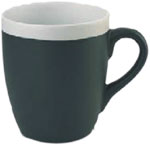
    Guinness mug

    Guinness mug

    The first time I went to Dublin, I brought back souvenirs for family and friends. I remember that for my dad, I bought a Guinness mug, like this one.

    My dad didn’t really have much use for it, so it sat in the cupboard for a while, unused. At some point I adopted it for my own – I can’t remember whether this happened while I was still living with my parents, or when I moved out, or whether I actually claimed it during a visit to their house after I had already moved out.

    For many years, it has been my “office” mug, and has contained maybe 1000 cups of tea or coffee per annum.

    This was an utterly pointless anecdote.

  • Frothy

    You want to know just how frothy these beers are? Take a look at this.

    **Beer:** London Bitter (Brubox)
    **Brewery:** Pete
    **Strength:** ?.?%

    my beer

    The pint glass containing the other half pint of froth is out of shot.

    I think I may have made a mistake at some point.

    1 (but that’s not the point really. It’s a learning experience.)